Walking through modern grocery aisles can feel like navigating an advertising minefield. Food packages are plastered with colorful marketing claims: "All Natural," "Immunity Support," "Heart Healthy," or "Multi-Grain." However, regulatory standards for front-of-package marketing banners are often broad, leaving consumers confused about what is truly inside the package.
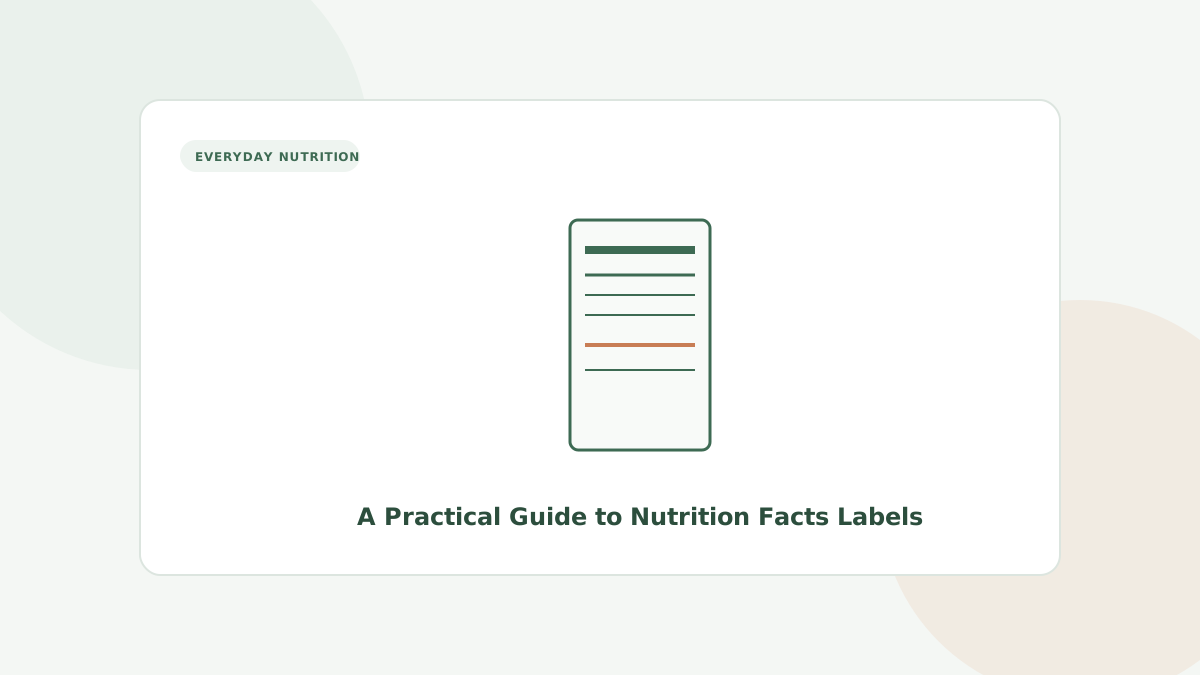
Fortunately, the United States Food and Drug Administration (FDA) mandates a standardized tool that cuts through marketing hype: the Nutrition Facts label. Understanding how to scan this panel in ten seconds flat transforms food shopping from guesswork into an informed, empowered practice.
1. Start With the Serving Size and Servings Per Container
The very top of the label displays two essential numbers that govern every other data point below them: the Serving Size (expressed in household measures like cups or tablespoons alongside metric grams) and the Servings Per Container.
All calorie and nutrient calculations on the label reflect a single serving—not the entire package. If a 16-ounce (473 ml) beverage container lists 120 calories per serving, but contains two servings, drinking the entire bottle means consuming 240 calories. Checking this first prevents unintentional underestimations of sodium, sugar, and caloric intake.
2. Understand the Power of the 5/20 Rule for % Daily Value
The % Daily Value (%DV) column on the right side of the label indicates how much a nutrient in a single serving contributes to a total daily diet based on a reference intake of 2,000 calories per day. You do not need to do complex arithmetic to benefit from %DV; simply apply the standard 5/20 rule endorsed by public health educators:
- 5% DV or less is LOW: Aim for low percentages when evaluating nutrients you want to moderate, such as saturated fat, trans fat, sodium, and added sugars.
- 20% DV or more is HIGH: Aim for higher percentages when looking for beneficial nutrients that support long-term wellness, including dietary fiber, vitamin D, calcium, iron, and potassium.
3. Differentiate Between Total Sugars and Added Sugars
One of the most consequential modern updates to the Nutrition Facts label was the mandatory inclusion of a dedicated line for Added Sugars beneath Total Sugars. Total sugars include naturally occurring sugars found in whole fruit (fructose) and unsweetened dairy milk or plain yogurt (lactose), which come packaged with beneficial fiber, protein, and micronutrients.
In contrast, Added Sugars refer to sugars incorporated during manufacturing, such as high-fructose corn syrup, cane sugar, honey, and concentrated fruit juice purées. The American Heart Association (AHA) recommends limiting added sugar to no more than 6 teaspoons (25 grams) per day for most adult women and 9 teaspoons (36 grams) per day for most adult men to protect cardiovascular and metabolic health.
4. Look at Sodium Levels With a Discerning Eye
The Centers for Disease Control and Prevention (CDC) reports that approximately 90 percent of Americans aged two and older consume more sodium than recommended. The daily recommended limit for healthy adults is 2,300 milligrams (mg)—the equivalent of just one level teaspoon of table salt. Because sodium acts as both a flavor enhancer and a preservative, substantial amounts are frequently hidden in everyday items like sandwich bread, salad dressings, and canned soups. Striving for foods with less than 140 mg per serving qualifies the product as "low sodium."
5. Review the Ingredients List for Transparency
Always glance beneath the numerical facts to the ingredients panel. Ingredients are legally required to be listed in descending order by weight. The first three to five ingredients comprise the vast majority of the product. If sugar, enriched white flour, or hydrogenated oils appear at the top of the list, the food is less nutrient-dense than whole-grain or vegetable-forward alternatives.
Putting Label Literacy to Work
Reading nutrition labels is not about obsessive restriction or guilt; it is an objective tool for aligning packaged foods with your personal health objectives. Pair this skill with our suggestions on How to Build a Balanced Lunch That Keeps Your Day Organized to construct meals that nourish your body throughout demanding days.